Economy vs. Premium Economy vs. Business vs. First Class: What’s the Difference?
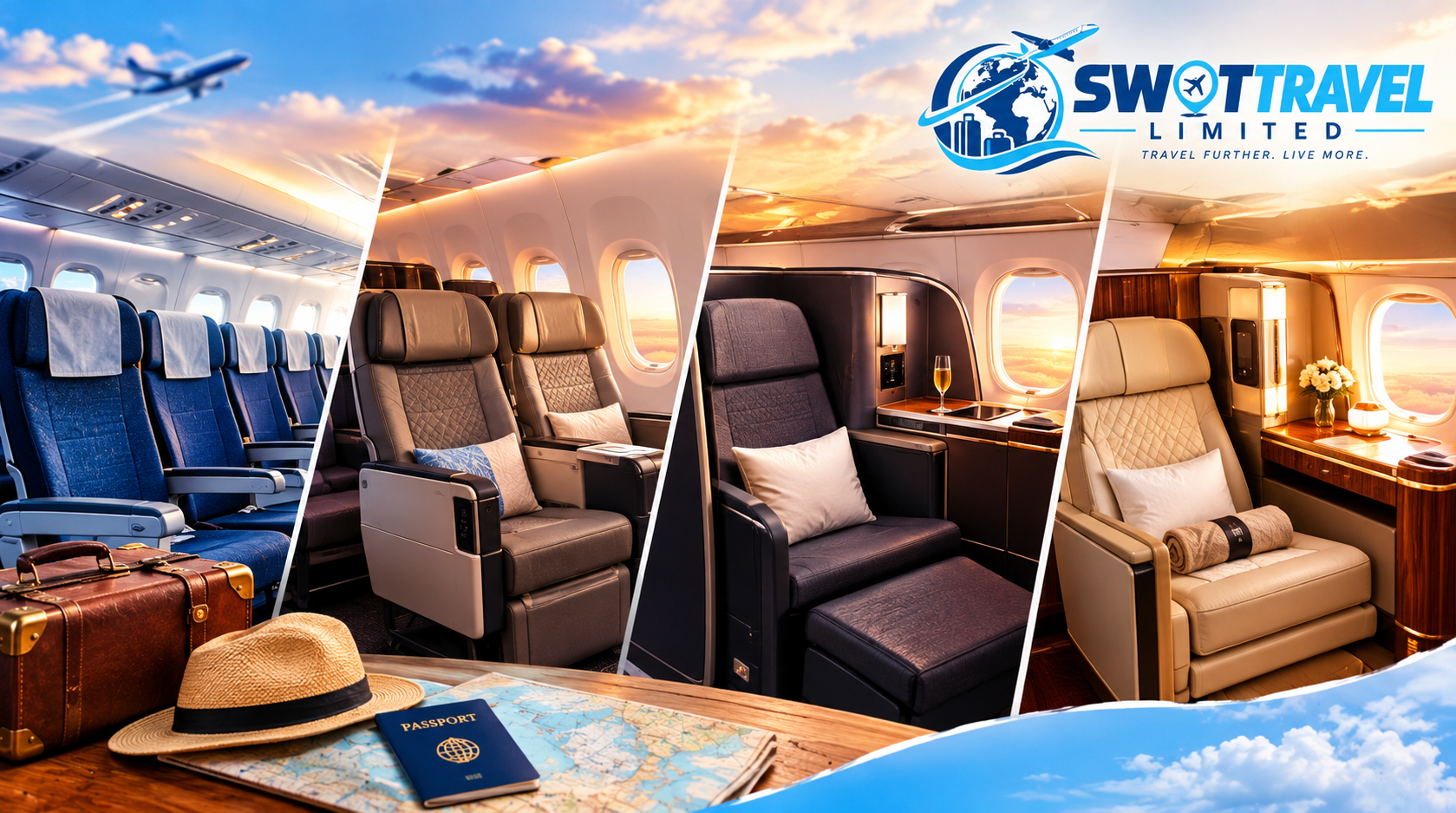
Back to Travel Info Economy vs. Premium Economy vs. Business vs. First Class Economy vs. Premium Economy vs. Business vs. First Class: What’s the Difference? Choosing a flight is not only about finding the right destination. The class you travel in can significantly change your experience, from the amount of space you have to the food, service, airport experience, and sleeping arrangements. Here is a simple guide to the main cabin classes you may encounter when booking an international flight. 1. Economy Class — Practical and Affordable Economy Class is the standard cabin on most commercial flights and is generally the most affordable option. Passengers typically receive a standard seat, meal or refreshments on longer flights, and access to the airline’s entertainment system where available. Legroom and seat width are more limited than in higher classes. The experience: Economy is suitable for travellers who want to reach their destination while keeping their flight costs relatively low. For shorter journeys, the difference between cabin classes may feel less significant. 2. Premium Economy — More Space and Comfort Premium Economy sits between Economy and Business Class. Depending on the airline, passengers may receive a wider seat, additional legroom, enhanced meals, priority services, and increased baggage allowances. The experience: The extra space can make a noticeable difference, particularly on long-haul flights. It offers an upgraded experience without the full cost of Business Class on many routes. 3. Business Class — Comfort and Premium Service Business Class is designed around greater comfort and additional service. On many long-haul aircraft, Business Class seats can recline into fully flat beds. Passengers may also receive priority check-in and boarding, additional baggage allowance, lounge access, upgraded meals, and more personalized service. The experience: For overnight or long-distance flights, the ability to lie flat and rest properly can be one of the biggest differences compared with Economy. 4. First Class — A More Exclusive Experience First Class is generally positioned as the airline’s most premium cabin, although not every airline offers it. Depending on the airline and aircraft, passengers may have private suites or enclosed spaces, premium dining, dedicated service, luxury amenity kits, lounge access, and priority services throughout the airport experience. The experience: First Class places greater emphasis on privacy, personalized service, and space. Some airlines also provide exclusive ground services before and after the flight. At a Glance Feature Economy Premium Economy Business First Class Seat space Standard More space Much more space Highest level of space Meals Standard Enhanced Premium Premium dining Lounge access Usually not included Sometimes Often included Usually included Priority services Limited Some Yes Extensive Lie-flat seat Usually no Usually no Often Often Privacy Low Moderate High Very high Price Lowest Higher Significantly higher Highest Which Cabin Should You Choose? There is no single cabin that suits every traveller. Your choice can depend on flight duration, budget, personal comfort preferences, baggage needs, and the type of experience you want. For a short flight, Economy may provide everything you need. For a long-haul journey, Premium Economy or Business Class may offer additional space and comfort that can make the journey easier. First Class provides a more exclusive experience for travellers seeking the highest level of privacy and service offered by a particular airline. Before booking, compare what is actually included in each fare. Cabin names can mean different things between airlines, and the aircraft operating your flight can also affect the experience. Travel in the Class That Fits Your Journey From practical Economy seats to private First Class suites, airline cabins offer different ways to experience the same journey. SWOT Travel — helping you understand your options, plan your journey, and travel further. OUR SERVICES Check Out Our Travel Services Check out our travel services while you think on your next vacation Flight Booking Book flights to destinations worldwide with the best fares and flexible options Hotel & Accomodation Stay in top-rated hotels, resorts and apartments at great rates Holiday Packages Curated holiday packages for couples, families and groups worldwide Visa Assistance Get expert support with visa application and documentation See All Our Services
8 Important Things to Know Before Travelling Abroad
Back to Travel Info Things to Know Before Travelling Abroad Travelling abroad is an exciting opportunity to discover new destinations, cultures, food, and experiences. However, knowing a few important details before you leave can make your journey much easier. Here are 8 things every traveller should consider before an international trip. 1. Check Your Passport Make sure your passport is valid for your entire journey and meets the entry requirements of your destination. Some countries require additional passport validity beyond your travel dates. 2. Understand Visa Requirements Check whether you need a visa, electronic travel authorization, or another form of entry permission. Apply early where necessary to avoid last-minute complications. 3. Know the Local Currency Find out what currency is used at your destination and research how easy it is to access cash. Also check whether your bank cards are accepted and whether international transaction fees may apply. 4. Research Local Transportation Learn how you will move around after arrival. Airports, trains, buses, taxis, ride-hailing services, and car rentals may all be available depending on the destination. 5. Check the Weather Weather conditions can affect what you pack and the activities you plan. Check the forecast close to your departure date and prepare clothing suitable for the expected conditions. 6. Learn About Local Customs Different destinations have different traditions and social expectations. Learn about appropriate clothing, greetings, dining etiquette, photography rules, and behaviour at religious or cultural sites. 7. Keep Emergency Information Save important contact details before you travel. These can include your accommodation, local emergency services, travel provider, insurance company, and your country’s embassy or consulate where applicable. 8. Keep Your Plans Flexible A detailed itinerary is useful, but unexpected opportunities can make a trip even more memorable. Leave some free time to explore local attractions, try new experiences, and enjoy your surroundings. Travel With Confidence Good preparation allows you to focus less on travel stress and more on discovering your destination. Before your next journey, take time to research, prepare your documents, understand local conditions, and organize the essentials. SWOT Travel — Travel Further. Live More. OUR SERVICES Check Out Our Travel Services Check out our travel services while you think on your next vacation Flight Booking Book flights to destinations worldwide with the best fares and flexible options Hotel & Accomodation Stay in top-rated hotels,resorts and apartmentsat great rates Holiday Packages Curated holiday packages for couples, families and groups worldwide Visa Assistance Get expert support with visa application anddocumentation See All Our Services